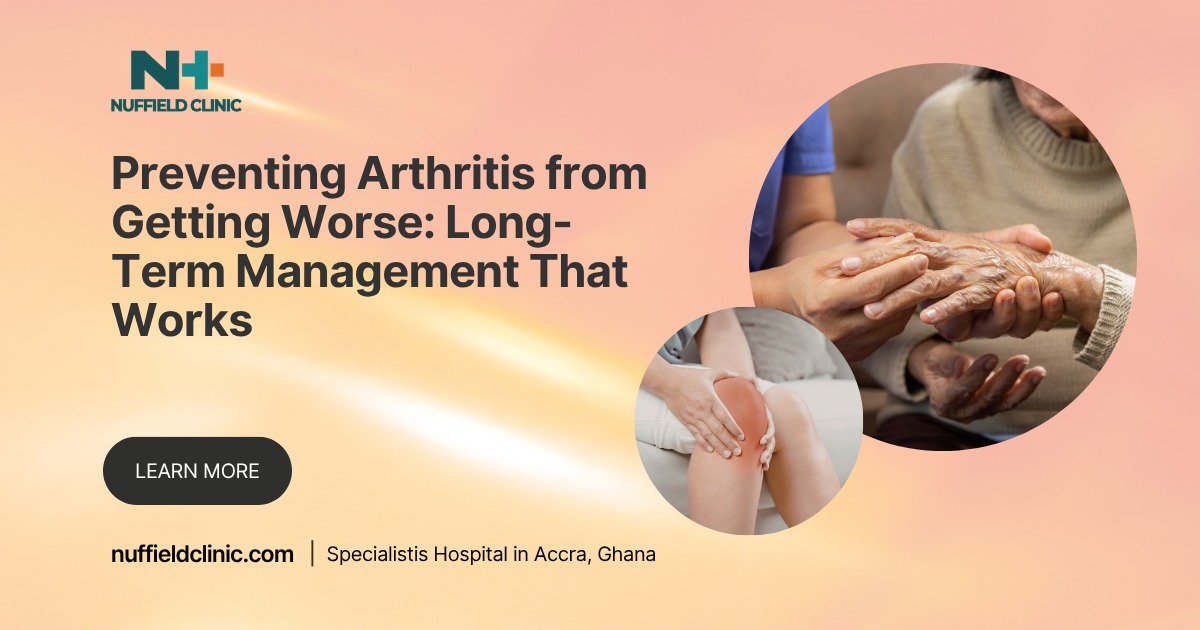
How can Arthritis pain be prevented from getting worse? Arthritis is often described as a “progressive” condition, but progression is not the same as inevitability.
Joint changes may develop over time, but how fast arthritis worsens and how much it affects your life depends heavily on how early and how well it is managed.
At Nuffield Clinic, long-term arthritis care focuses on one goal: preserving joint function and quality of life for as long as possible. This requires consistency, not just medication.
How to Prevent Arthritis from Getting Worse
Preventing arthritis from worsening is not about one single intervention; it is about reducing the three main drivers of progression: joint stress, inflammation, and inactivity.

The most powerful starting point is weight control. Even a modest weight loss of 5 – 10% can significantly reduce pressure on weight-bearing joints like the knees and hips. Less pressure means slower cartilage breakdown and less pain over time.
Equally important is regular, controlled movement. Many people avoid exercise because of pain, but inactivity actually accelerates stiffness and joint degeneration. Low-impact activities such as walking, swimming, or cycling help maintain joint lubrication and strengthen the muscles that support the joint.
Joint protection also matters. Simple adjustments, like improving posture, using ergonomic chairs, avoiding repetitive strain, and wearing supportive footwear, can prevent unnecessary wear and tear.
Finally, managing inflammation through diet, sleep, and stress control plays a crucial role, especially in inflammatory conditions.
What Stops Arthritis from Progressing?
Strictly speaking, nothing completely “stops” arthritis in all cases, but progression can be significantly slowed or controlled.
For Osteoarthritis, the focus is on slowing structural damage. This is achieved through:
- Weight reduction
- Strengthening surrounding muscles
- Avoiding joint overuse
- Using appropriate medications when needed
For Rheumatoid Arthritis, progression can be more aggressive—but also more controllable with modern medicine. Early use of disease-modifying drugs (DMARDs) can dramatically reduce joint damage and, in some cases, bring the disease into remission.
Across all types, the most important factor is early and consistent treatment. Delays allow damage to accumulate, often irreversibly.
Does Arthritis Get Worse With Age?
Age is a major factor, but it is not the only factor.
As people get older, several changes occur:
- Cartilage becomes less flexible and more prone to damage
- The body’s ability to repair joint tissues declines
- Years of mechanical stress accumulate
This is why Osteoarthritis becomes more common with age.
However, arthritis does not automatically worsen just because you are ageing. Many people maintain stable symptoms for years with proper management. In contrast, poor lifestyle habits, such as inactivity, obesity, and untreated inflammation, can accelerate progression at any age.
How Fast Does Arthritis Get Worse?
The rate of progression varies widely depending on the type of arthritis and how it is managed.
In Osteoarthritis, progression is usually slow and gradual, often developing over many years. Some people experience only mild changes over a long period, while others may notice faster deterioration if risk factors are present.
In Rheumatoid Arthritis, progression can be rapid without treatment, with joint damage occurring within months to a few years. However, with early medical intervention, this progression can be dramatically slowed.
The key takeaway is that arthritis progression is not fixed; it can be influenced significantly by treatment and lifestyle choices.
What Happens If Arthritis Is Left Untreated?
Leaving arthritis untreated is one of the biggest risk factors for severe disability later in life.
Over time, untreated arthritis can lead to progressive joint damage, including cartilage loss, bone erosion, and joint deformity. This results in increasing pain, stiffness, and reduced mobility.
Daily activities such as walking, climbing stairs, or even gripping objects can become difficult. In advanced stages, joint function may be severely limited, affecting independence and quality of life.
In inflammatory conditions like Rheumatoid Arthritis, the risks extend beyond the joints. Chronic inflammation can affect other parts of the body, increasing the risk of:
- Lung complications
- Heart disease
- Bone loss (osteoporosis)
- General fatigue and reduced lifespan
This is why early diagnosis and treatment are critical, not just for comfort, but for long-term health.
Long-Term Strategy: What Actually Works
The most effective way to prevent arthritis from worsening is to combine multiple strategies consistently over time.
This includes:
- Staying physically active with low-impact exercise
- Maintaining a healthy weight
- Using medications appropriately under medical supervision
- Managing inflammation through diet and lifestyle
- Attending regular medical reviews to monitor progression
Arthritis is not a condition you manage once; it is a condition you manage continuously.
Arthritis may be progressive, but it is also manageable. The difference between mild discomfort and severe disability often comes down to early action and long-term discipline.
At Nuffield Clinic, we help patients take control of their condition, slowing progression, preserving mobility, and maintaining independence for years to come.